
New polling suggests recent Indigenous rights developments in British Columbia are shifting public opinion, with growing concern over property rights and signs that the post-Kamloops consensus may be weakening.
These results are drawn from two online surveys conducted by Innovative Research Group in March 2026 of adult Canadians in British Columbia. The first was of 406 adults in weeks 1 and 2, and the second was of 396 adults in weeks 3 and 4. Both samples are weighted to n=300 each, with weights based on Statistics Canada census data for age, gender, region, and education, as well as self-reported federal past vote.
Over the last few months, several court cases involving Aboriginal property rights have been influenced by BC laws related to the UN Declaration on the Rights of Indigenous Peoples. The Cowichan case has generated the most attention. In addition, controversy has emerged over several agreements between the Musqueam and the federal government. In both developments, only a plurality of British Columbians are aware of the details. But among those who are aware, British Columbians aren’t sure they like what they see.
Looking at the Cowichan decision, only 45% of British Columbians are familiar with it. But net concern among the familiar is +35 versus -4 among those not familiar.
The source of concern is simple – a majority (57%) of British Columbians see the ruling as a threat to property rights. Among the concerned, 51% cite loss of property rights and land ownership security as their primary reason, and 19% cite the decision as unfair or a negative precedent.
A plurality of British Columbians are not sure if they should blame the courts or the NDP. Among those with a view, 34% blame the NDP and 27% blame the courts.
British Columbians are sure that something should be done to protect the fee simple title. A majority (52%) support legislation to place fee simple ahead of Aboriginal title.
Familiarity with the Cowichan decision makes a big difference. Support for legislation protecting fee simple property rights jumps from net +26 among the unfamiliar to +54 among those who are familiar with the decision.
In short, while awareness is limited, familiarity increases concern and drives demand for legislative action.
In the case of the Musqueam agreement, only 41% of BC residents are familiar with it, and impressions are mixed: 26% good, 27% bad, 32% a mix. The agreement leaves 29% less favourable toward the federal government and just 18% more favourable, with a plurality (42%) reporting it makes no difference. The Musqueam Agreement divides BC along age and party lines, with limited upside for the federal government.
Once again, familiarity matters. Negative impact on the federal government jumps from 28% among those with limited awareness to 42% among those more familiar.
Taking a step back from the specifics of the cases, we can see a shift in attitudes on Indigenous rights taking place. INNOVATIVE tracks attitudes toward Indigenous rights every year, and 2026 is a marked shift from the last half-decade. Based on the two statements “Canada’s Indigenous peoples should have the same rights as any other Canadian, no more and no less” and “Indigenous peoples should have the rights and status they need to protect their culture and heritage, even if it means they may have certain rights other Canadians do not have,” we have break the population into four segments reflecting their attitudes towards Indigenous rights.
Nearly half of British Columbians (46%) are now ‘Equal Treatment’ supporters, up 13 points from 33% in 2025, while the ‘Conflicted’ segment has shrunk from 38% to 27%. Even among NDP voters, a plurality of 39% are now equal-treatment supporters.

The Kamloops discovery in 2021 triggered a major shift towards support for Indigenous rights. As recently as last May, there were further gains for the Indigenous point of view. That trend has at least been disrupted. Only time will tell if it has been reversed.
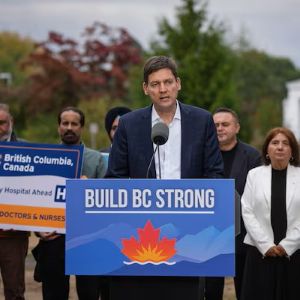
Public opinion is only one consideration for governments on this issue. But in BC, it is worth noting that indigenous rights have the potential to divide the governing NDP coalition. Looking at this from a public opinion perspective, it makes very little sense for David Eby to risk an election over this issue.
Click here to read the full report!