

High Voter Intensity Leading Into Alberta’s Referendum
Albertans are indicating that turnout for Monday’s referendum vote will be very high.
These are the results of an online survey conducted between September 04, 2026, and September 28, 2026, sponsored and conducted by INNOVATIVE RESEARCH GROUP. This survey interviewed n=648 Albertans aged 18 or older. The results are provincially weighted to n=600. Results are weighted by age, gender, region, education, and self-reported past federal vote to ensure the overall sample’s composition reflects the population, according to Census data.
As of today (October 16), Elections Alberta is already reporting that 1.02 million votes have been cast, including 491,000 special ballots. This means roughly 1/3 of the eligible voters in Alberta have already voted – putting us halfway to the 60.5% voter turnout in the 2023 provincial election before advance voting closes tomorrow.
With that in mind, how high can we expect voter turnout to be? The answer appears to be “high but probably not unprecedented”. If we compare it to the federal election last year, which saw an actual final turnout of 68%, we see that the self-reported vote intention is about the same:
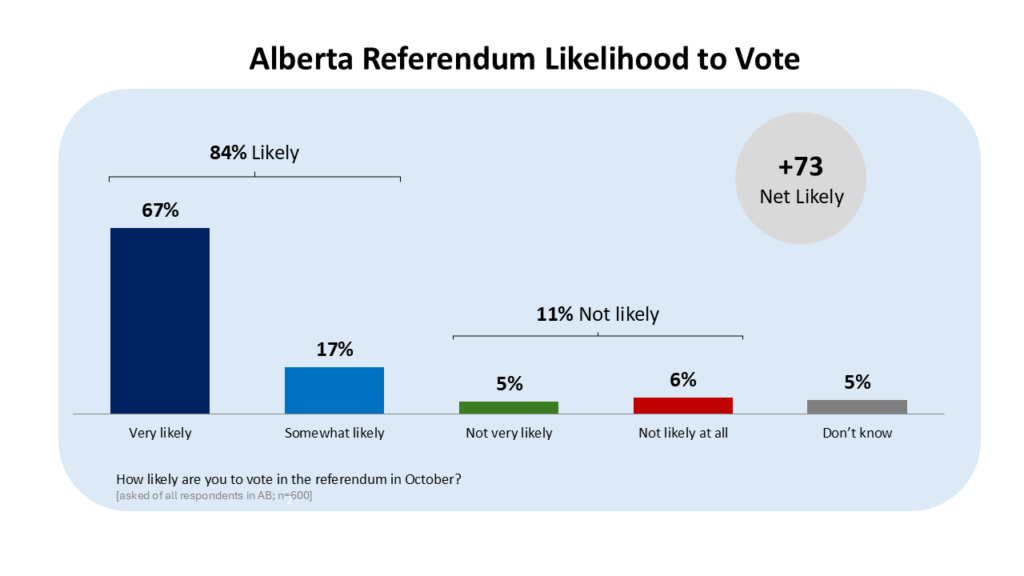
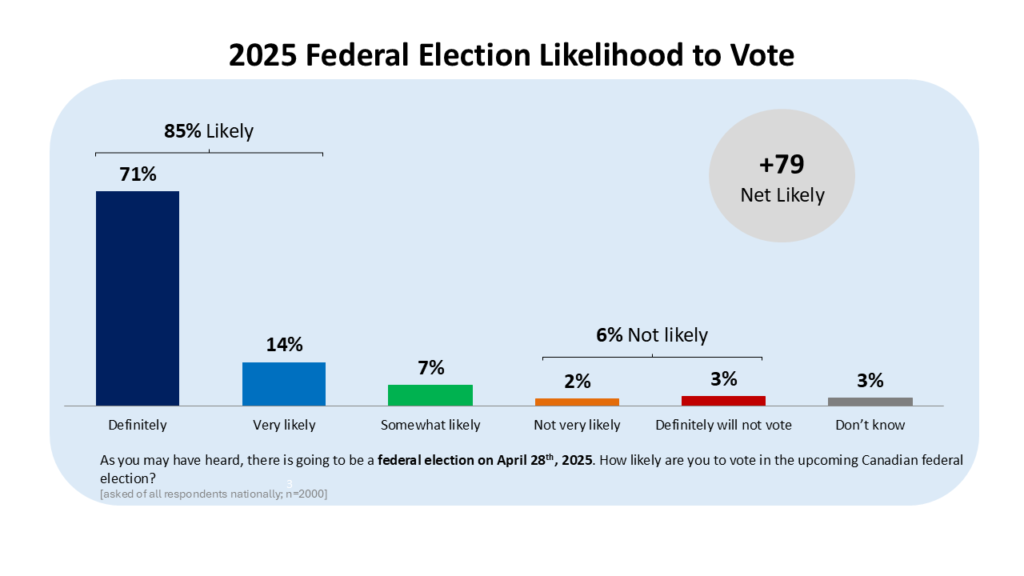
Self-reported vote intention almost always comes out well ahead of actual turnout. People overstate their attention, or their plans to vote are overtaken by other things, and people who take surveys do tend to be more politically engaged than those who do not.
With that said, however, 84% saying that they are very or somewhat likely to vote fits with turnout falling in the range from the high 60s to the low 80s. What we are seeing here for self-reporting is high, but not outside what we have seen in recent high-turnout elections. Elections Alberta has said publicly that they are preparing for record turnout at the higher end of this range – as is their job.
So which side has the intensity advantage as all these votes are being cast? The answer, apparently, is neither, with both sides of the referendum ballot reporting similar likelihood to vote. (71% very likely for the separatists, and 73% very likely for the remain side.)
This intensity question is particularly important since the topline on how people intend to vote in the referendum has changed only marginally from when Premier Smith announced the vote in June:
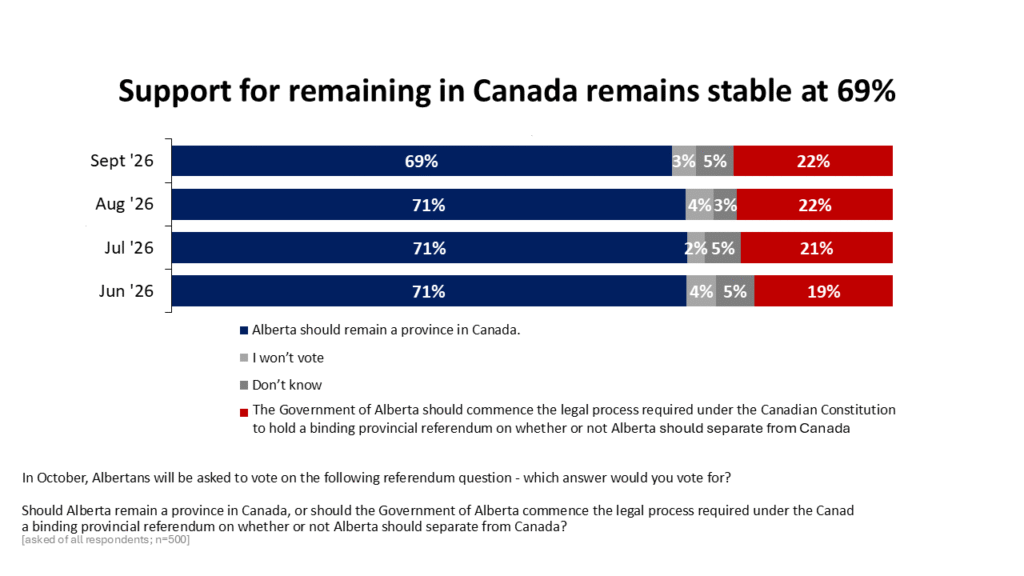
This combination of equalized voter intensity and the marked edge in public support for the ‘remain’ side should result in a strong win for the remainers. If we assign roughly 25% support to the separatist side, then even 90% turnout on their side wouldn’t result in a win unless turnout for remain dipped below 28%. There is no indication that a wild turnout imbalance of that sort is likely.
That certainly doesn’t mean that the drama ends on October 19th. Even in the event of a solid supermajority win for remain, the separatist faction within the governing UCP remains large, organized, and will likely also be motivated and angry following a public rebuke. We will be watching carefully to see how that impacts the UCP’s internal politics – something we previously discussed here.
Much more to come.