
Public Affairs Research
What does the public think and feel about the issues of the day?
Every week, INNOVATIVE researchers explore basic public opinion questions:
- What are the key issues the public is talking about?
- How are they reacting to breaking issues?
- What are the public’s expectations of government?
INNOVATIVE consultants come both from the practical world of campaigns and issues management and the academic world of political science. Combining our experience managing campaigns and issues across Canada with latest insights from the academic world gives us an edge. That’s how we help our clients understand what the public really thinks about an issue, and how they are likely to react when new information is presented, or passions are inflamed.
Latest Articles on Public Affairs & Opinion Research:
May 15, 2026
May 15, 2026
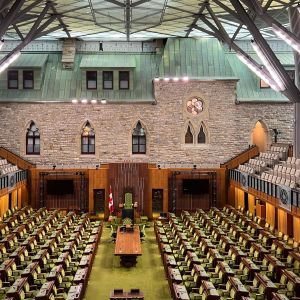
INNOVATIVE’s tracking finds Canadians consistently more likely to say the government is moving too slowly than too fast.
Do you like it?
April 21, 2026

April 21, 2026
New polling suggests recent Indigenous rights developments in British Columbia are shifting public opinion, with growing concern over property rights and signs that the post-Kamloops consensus may be weakening.
Do you like it?
April 7, 2026

April 7, 2026
Most Ontarians didn’t notice the recent budget, with mixed political signals for the Ontario PCs
Do you like it?
April 1, 2026

April 1, 2026
Re-examining our December cultural alienation survey shows more than one-in-four Canadians (27%) belong to the Alienated, Populist Left.
Do you like it?
March 23, 2026

March 23, 2026
Two-thirds of Canadians are following news of the conflict closely, and three quarters say Canada should at least do what it can to expand oil and gas markets.
Do you like it?
March 9, 2026

March 9, 2026
Premier Eby’s provincial budget is the most unpopular since Premier Campbell’s HST budget in 2010. Even among NDP loyalist, with fewer than half satisfied with it.
Do you like it?
March 2, 2026

March 2, 2026
Canadians want stability from their political leaders, and they want it by a clear margin. But when you look at how they actually perceive the two main leaders, the picture is less clear than you might expect.
Do you like it?
February 23, 2026

February 23, 2026
Since Carney’s Davos speech, leadership evaluations and federal approval were moving — but the ballot was not. That has now changed as the Liberals have moved into a clear lead. Crucially, however, this shift is being driven by gains from the NDP and undecided, not from Conservative losses.
Do you like it?
Latest Articles on Public Affairs & Opinion Research:
May 15, 2026
May 15, 2026
INNOVATIVE’s tracking finds Canadians consistently more likely to say the government is moving too slowly than too fast.
Do you like it?
April 21, 2026
April 21, 2026
New polling suggests recent Indigenous rights developments in British Columbia are shifting public opinion, with growing concern over property rights and signs that the post-Kamloops consensus may be weakening.
Do you like it?
April 7, 2026
April 7, 2026
Most Ontarians didn’t notice the recent budget, with mixed political signals for the Ontario PCs
Do you like it?
April 1, 2026
April 1, 2026
Re-examining our December cultural alienation survey shows more than one-in-four Canadians (27%) belong to the Alienated, Populist Left.
Do you like it?
March 23, 2026
March 23, 2026
Two-thirds of Canadians are following news of the conflict closely, and three quarters say Canada should at least do what it can to expand oil and gas markets.
Do you like it?
March 9, 2026
March 9, 2026
Premier Eby’s provincial budget is the most unpopular since Premier Campbell’s HST budget in 2010. Even among NDP loyalist, with fewer than half satisfied with it.
Do you like it?
March 2, 2026
March 2, 2026
Canadians want stability from their political leaders, and they want it by a clear margin. But when you look at how they actually perceive the two main leaders, the picture is less clear than you might expect.
Do you like it?
February 23, 2026
February 23, 2026
Since Carney’s Davos speech, leadership evaluations and federal approval were moving — but the ballot was not. That has now changed as the Liberals have moved into a clear lead. Crucially, however, this shift is being driven by gains from the NDP and undecided, not from Conservative losses.
Do you like it?