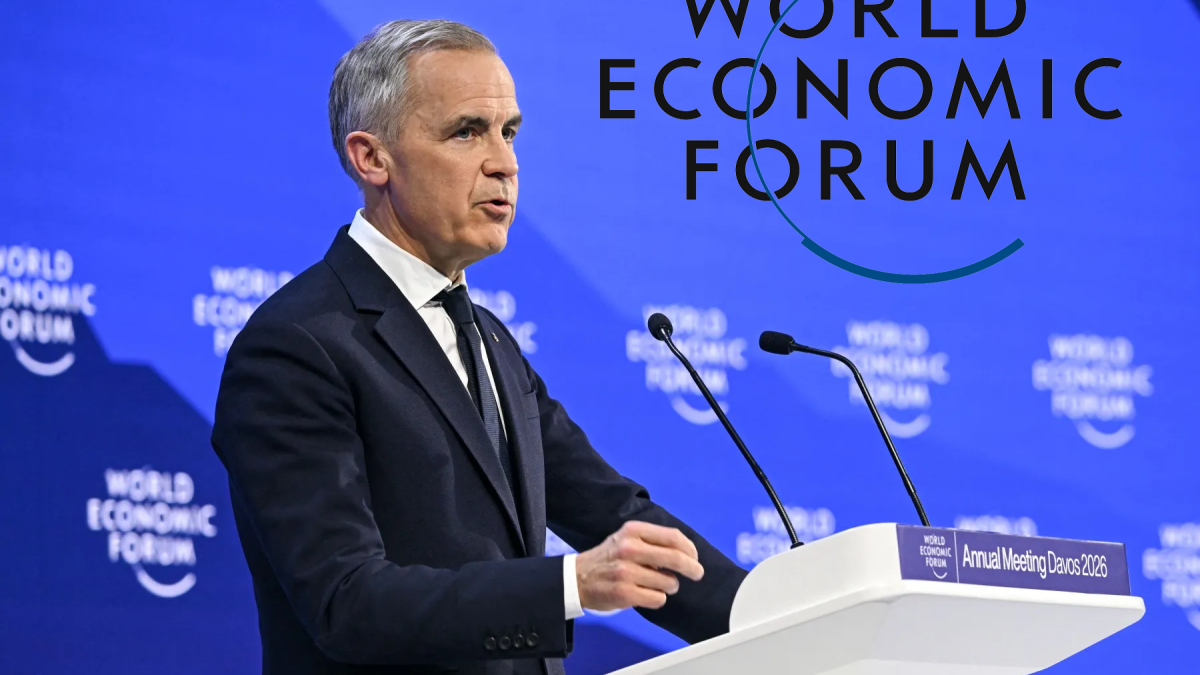
In a fragmented communications environment, Mark Carney’s Davos speech emerged as a rare communication moment that clearly registered with Canadians. While there has been an immediate impact on perceptions of leadership and government performance, vote intentions remain largely unchanged.
These results are drawn from an online survey conducted between January 22 and February 2, 2026, sponsored and conducted by Innovative Research Group. The survey interviewed n = 1,666 Canadian citizens aged 18 and older, with results nationally weighted to n = 1,000 by age, gender, region, education, and self‑reported past federal vote to ensure the sample reflects Census population benchmarks.
Carney’s Davos Speech Cut Through a Fragmented Communications Landscape, and Canadians Liked It
Only a few recent political events have achieved the level of awareness of the Davos speech. Seven-in-ten Canadians (70%) say they have at least heard of it, and 47% report being familiar with it. Among those who have heard of the speech, roughly 60% report reading or watching at least some of it themselves rather than relying solely on reporting and commentary.
Reception is decisively positive. 65% report favourable impressions compared to only 15% unfavourable, producing a net favourability of approximately +50, an unusually strong response for a single political communication event.
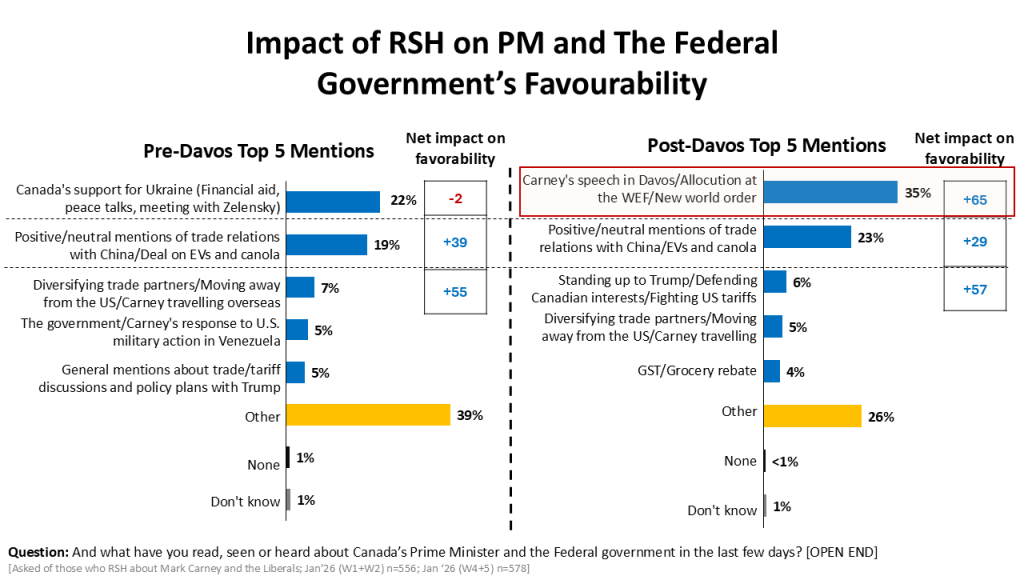
Those are results from asking specifically about the speech. But earlier in the survey, we asked a general awareness question about Mark Carney and the federal Liberal government, and we see similar positive mentions of the speech. Among those who RSH about Carney and the Liberals, 35% explicitly (in open-ended unaided recall) reference the Davos speech, resulting in a substantial net favourability impact of +65.
Positive Overall, Partisan in Intensity
While the overall reaction is favourable, the intensity of that favourability has a partisan skew. Among Liberal supporters, 86% hold a favourable view, followed closely by 76% among both NDP and Bloc supporters. In contrast, 44% of Conservatives report favourable impressions, noticeably lower than among other parties.
There is a critical age divide on the Davos speech. More than half (58%) of older Canadians (who are more likely to identify as liberal) report moderate to high familiarity with the speech, and 71% of them view it favourably. This compares to just 36% moderate to high familiarity among younger Canadians, of whom 57% express favourable impressions. The speech resonates more strongly with higher exposure among older Canadians than among younger.
Tone and Substance: Standing Firm Without Picking Fights
Canadians’ response to the Davos speech is reflected in Canadians’ general views on how to respond to Donald Trump. A strong majority of 70% say Canada should speak honestly about the impact Donald Trump is having on the world, even if it risks him harming Canada. Just 16% who believe it is a mistake to say things that might anger Donald Trump because of the risk of retaliation.
Support for this stance is strongest among Liberals (83%), NDP supporters (82%), and Bloc supporters (85%), but it also holds majority support among Conservatives (59%), indicating that confidence paired with diplomacy carries cross‑partisan appeal.
Stronger Impact on Perception of Government Than Vote Intention
We are not yet seeing an impact on vote from the Davos speech. But we are seeing underlying numbers moves, moves that often lead to vote shifts.
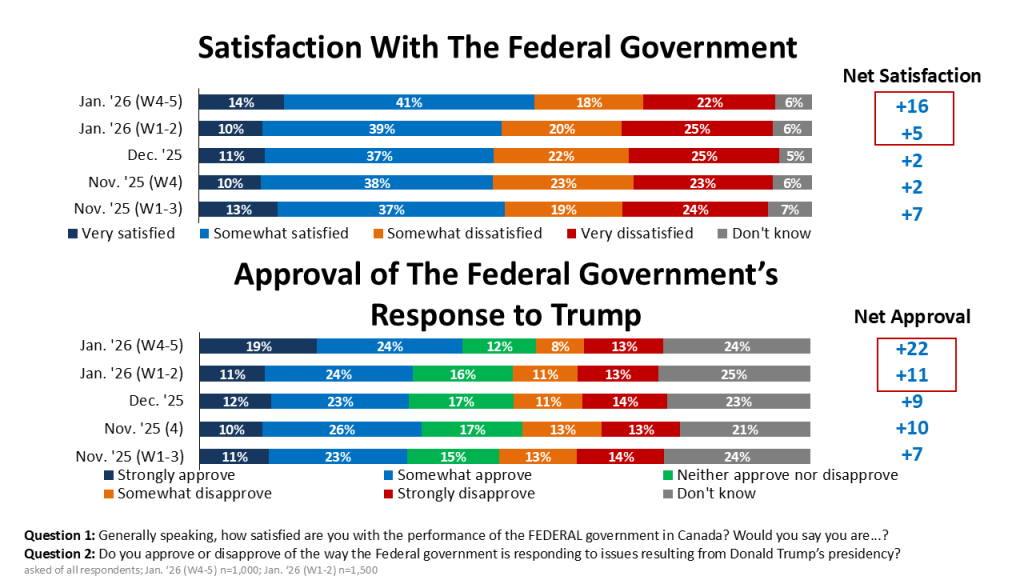
There are three major shifts from before to after the Davos Speech to watch:
- Overall satisfaction with the federal government (net satisfaction pre-Davos +5 vs. post-Davos +16),
- Approval of the government’s response to the Trump file (pre-Davos +11 vs. post-Davos +22), and
- Net Carney favourability (pre-Davos +14 vs. post-Davos +21).
51% of Canadians hold a favourable view of Mark Carney, compared with 31% who hold an unfavourable view, resulting in a net favourability of +21. This contrasts with Pierre Poilievre’s net favourability of -6, with 42% unfavourable.
Vote Intention Remains Essentially Stable
Despite a strong impact on the government perception, vote intention shows only marginal movement relative to pre-Davos levels. A two‑point Liberal lead (40% vs 38%) falls within the margin of error, suggesting stabilization rather than a decisive electoral shift. The speech appears to influence Canadians’ evaluations of leadership and governance more than their current voting intentions.
The Broader Context and Its Limits
Carney’s Davos speech is a rare political moment when most of the country stopped, watched a political event, and shared a common take-away. Savour the moment.
What we don’t know yet is how big a difference it will make in politics.
In our poll, we don’t see a significant shift in vote, but we do see significant shifts in numbers that often lead to vote change.
Why would such a positive political moment not pay off for Carney and the Liberals? Because other forces are at play:
- People might like the speech, but the government has not been able to stop the pain being inflicted by Trump on Canadians, and there may not be a resolution in sight.
- The speech doesn’t change the reality of the affordability crisis.
- The speech does not change the reality of cultural alienation.
This moment unfolds as Parliament returns to session, opposition leadership is reaffirmed, and economic and regional pressures intensify. Yet the Davos speech stands out precisely because it temporarily transcended these dynamics, generating a perceptual peak in favourability and approval without fundamentally redrawing the electoral landscape.
The central question is durability. The speech has produced measurable gains in awareness, favourability, and leadership alignment, some at post‑election highs. But whether this represents a sustained repositioning or a short‑term crest remains uncertain.